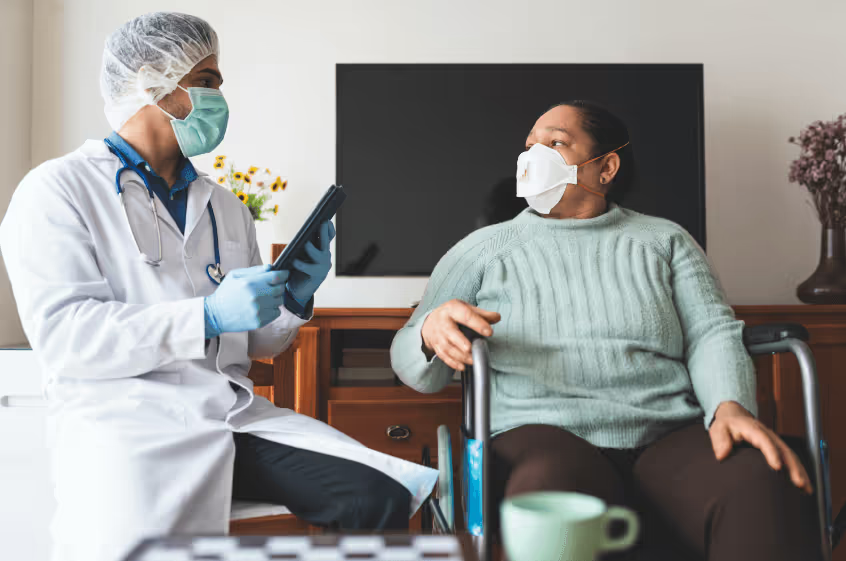
How to Choose the Right Trained Attendant for Home Care: The Ultimate Guide for Indian Families
In India, our homes are sacred and family bonds are deep. Bringing in a caregiver is more than a professional hire-it is an act of trust. From clinical scrutiny to emotional intuition, discover the ultimate roadmap to selecting a trained attendant who respects your home and provides the expert care your loved one deserves.
Selecting a trained attendant for a loved one is more than just a hiring decision; it is an act of trust. In the Indian context, where family bonds are tight and homes are sacred spaces, bringing in a professional caregiver requires a delicate balance of clinical scrutiny and emotional intuition.
Whether you are caring for an elderly parent, a patient recovering from major surgery, or someone with a chronic illness, the right attendant acts as the bridge between medical necessity and the comfort of home. This comprehensive guide, spanning over 4,000 words, provides a deep dive into every aspect of this selection process.
1. Understanding the Role of a Trained Attendant
Before you begin your search, it is vital to distinguish between a "Domestic Helper" and a "Trained Attendant." While a helper may assist with cleaning or light chores, a Trained Attendant (or General Duty Assistant - GDA) is specifically educated to manage patient health and safety.
The Scope of Work
A trained attendant’s responsibilities typically include:
- •Assistance with ADLs (Activities of Daily Living): Helping the patient with bathing, grooming, dressing, and oral hygiene.
- •Mobility Support: Safely transferring the patient from the bed to a wheelchair, or assisting with light walking to prevent falls.
- •Nutrition Management: Feeding the patient and ensuring they follow the diet prescribed by their doctor (e.g., low-salt for hypertension).
- •Elimination Care: Managing diapers, assistance with commode chairs, or monitoring catheter bags (if applicable).
What They Are Not
It is a common misconception in India that an attendant will also cook for the whole family or do general housework. To ensure quality care, their focus must remain 100% on the patient.
2. Step-by-Step Assessment of Your Care Needs
You cannot choose the "right" person if you haven't defined the "right" job. Sit down with your family and the patient's doctor to fill out this checklist:
A. Clinical Complexity
- •Stable Condition: Does the patient just need help with walking and eating?
- •Semi-Critical: Does the patient have a tracheostomy, or do they require Ryle's tube feeding or specialized wound care? If so, you may need a Nursing Assistant or a Registered Nurse (RN) rather than a basic attendant.
B. Physical Requirements
- •The Weight Factor: If the patient is non-ambulatory (cannot walk) and heavy, you need an attendant with physical strength to prevent injuries to both themselves and the patient.
- •Gender Preference: In many Indian households, female patients prefer female attendants (and vice versa) for tasks involving personal hygiene.
C. Duration of Care
- •The 12-Hour Shift: Common for families who are active during the day but need help at night, or vice versa.
- •The 24-Hour Live-in: Necessary for high-dependency patients. In this case, you must ensure the attendant has a dignified space to sleep and access to meals.
3. Key Qualities to Look for in a Candidate
While certificates matter, the "human" side of caregiving is what determines the success of home care.
Empathy and Patience
Chronic illness or aging can make patients irritable, stubborn, or depressed. A great attendant remains calm during a "sundowning" episode or when a patient refuses their medication for the third time in an hour.
Effective Communication
In India, the language barrier can be a significant hurdle. If your elder only speaks Marathi, Bengali, or Kannada, hiring an attendant who only speaks Hindi can lead to frustration and isolation for the patient.
Alertness and Observation
The best attendants are "detectives." They notice if the patient’s breathing has changed, if there is a new skin rash, or if the patient seems unusually lethargic. Early detection of these signs often prevents emergency.